
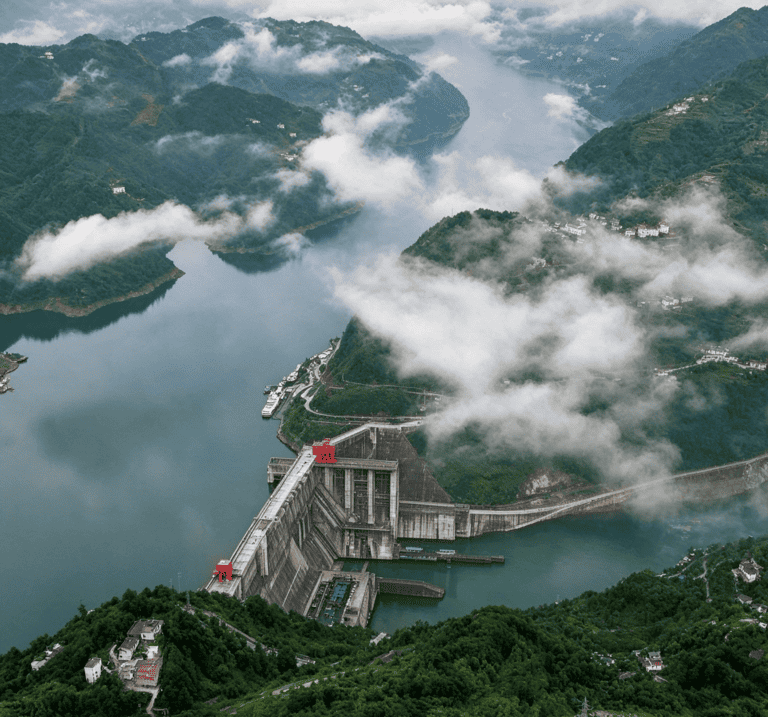
Dam Safety Monitoring and Automation at Ankang Hydropower Station
Application: Dam Safety Monitoring | Automated Data Acquisition | Safety Assessment | Online Monitoring
Project: AK Hydropower Station, China
Technology Focus: Automated monitoring, deformation measurement, seepage monitoring, stress and strain monitoring, environmental data acquisition, and monitoring data analysis.
Project Overview
Automated dam monitoring systems use computer-based technologies to collect and process observation data, identify potential abnormalities in dam behavior, and provide preliminary safety assessments and graded alarms.
Compared with conventional manual monitoring, automated systems offer several important advantages:
- Faster anomaly detection: Monitoring data can be collected and analyzed promptly, helping operators identify abnormal instrument readings or changes in dam behavior and take appropriate action sooner.
- Improved data reliability: Automated systems can incorporate self-checking, validation, and error correction functions. Out-of-range measurements can be flagged and, where appropriate, excluded from analysis, helping improve the reliability of monitoring results while minimizing manual intervention.
- Greater operational efficiency: Automated data collection, plotting, calculation, data processing, and system maintenance can reduce labor requirements and improve the efficiency of dam monitoring operations.
These capabilities make automated monitoring an important tool for supporting dam safety assessment and the long-term safe operation of hydropower infrastructure.
1. AK Hydropower Station and Monitoring System Upgrade
The project is a multipurpose water conservancy and hydropower development designed primarily for electricity generation, with additional benefits for navigation, flood control, tourism, and aquaculture.
Key project parameters include:
- Normal reservoir water level: 330.00 m
- Corresponding reservoir storage capacity: 2.58 billion m³
- Installed capacity: 800 MW, comprising four 200 MW generating units
- Firm output: 175 MW
- Average annual power generation: 2.8 billion kWh
The facility features a monolithic concrete gravity dam with an alignment incorporating straight sections and changes in direction, a powerhouse located downstream of the dam on the right bank, spillway facilities on the left bank, and a vertical ship lift.
The dam monitoring automation system underwent three phases of upgrades, completed in July 2004, October 2007, and April 2010.
These upgrades automated monitoring for multiple measurement systems, including plumb lines, alignment systems, elevation transfer, seepage around the dam abutments, foundation uplift pressure, internal dam instrumentation, leakage measurements, hydrostatic leveling systems in inspection galleries, and environmental parameters.
The upgraded system included automated acquisition from 255 internal monitoring instruments, three leakage measurement points, 257 hydrostatic leveling points in galleries, and other monitoring instruments and environmental measurement systems.
Automated data acquisition is performed once per day, while manual comparison measurements are conducted at least once every quarter, providing a reference for checking automated monitoring results.
2. Automated Monitoring System Configuration
2.1 Deformation Monitoring
2.1.1 Horizontal Displacement
Horizontal displacement is monitored using plumb-line and alignment systems.
At Ak Hydropower Station, five plumb lines are installed across the dam, with a total of 25 measurement points. Automated measurements are collected once per day, while manual comparison measurements are conducted quarterly.
The alignment system consists of 50 measurement points:
- 23 points at the dam crest
- 13 points in the gallery at elevation 298 m
- 14 points in the gallery at elevation 257 m
Automated acquisition is performed daily, with manual comparison measurements conducted quarterly.
These measurements help track horizontal deformation and support the assessment of the dam’s structural behavior over time.
2.1.2 Vertical Displacement
Vertical displacement is monitored using leveling techniques.
Geometric leveling is performed manually once per month. In addition, the hydrostatic leveling system comprises 32 measurement points, with automated data acquisition performed once per day.
Combining automated measurements with periodic manual observations helps operators monitor vertical movement and verify the consistency of measurement results.
2.2 Seepage Monitoring
2.2.1 Foundation Uplift Pressure
Foundation uplift pressure monitoring points are installed in the riverbed sections of the dam. No uplift pressure monitoring holes are installed in the dam sections along the two banks.
A total of 39 uplift pressure monitoring holes are distributed across the dam foundation grouting galleries, drainage galleries, and the bottom galleries of the stilling basins associated with the surface and middle outlets.
Automated measurements are collected once per day, while manual comparison measurements are performed monthly.
These measurements help assess foundation seepage conditions and changes in uplift pressure that may affect dam stability.
2.2.2 Seepage Around the Dam Abutments
Seepage monitoring around the dam abutments includes eight monitoring holes on the right bank and seven on the left bank.
The monitoring points are distributed across elevations ranging from 275.00 m to 380.00 m.
Automated data acquisition is performed daily. Manual comparison measurements are conducted quarterly using an electrical water-level meter.
This monitoring arrangement supports the observation of groundwater and seepage conditions around the dam abutments.
2.2.3 Dam Foundation and Leakage Monitoring
A total of 13 leakage monitoring points are installed at selected locations, including the bottom galleries of the surface and middle outlet stilling basins, the dam powerhouse sump, galleries at elevations 257.50 m, 280.00 m, and 298.00 m, and drainage tunnels No. 1, No. 2, and No. 3.
Automated monitoring is performed at the surface outlet, middle outlet, and dam sump locations. The remaining points continue to be monitored manually.
The combined arrangement provides information on leakage conditions at key locations and supports ongoing dam safety assessment.
2.3 Stress, Strain, and Temperature Monitoring
Stress, strain, and temperature monitoring covers a range of embedded and structural instruments, including:
- Strain gauges
- Thermometers
- Joint meters
- Crack meters
- Reinforcement stress meters
- Pore pressure gauges
- Multipoint displacement meters
The main monitoring locations include dam sections 5, 6, 13, 16, 17, 21, and 22; generating units No. 1 and No. 4 in the powerhouse; the middle outlet plug; shear-resisting and anti-sliding piles; and the ship lift frame structure.
A total of 783 instruments are included in this monitoring program. Of these, 255 instruments are connected to the automated monitoring system, while the remaining 528 instruments are connected to 36 junction boxes for manual monitoring.
Automated instruments are measured once per day. Manual measurements are performed monthly using the NDA1111 resistance-ratio indicator manufactured by NARI.
This monitoring arrangement provides information on the dam’s internal response, temperature changes, structural deformation, and other parameters relevant to long-term performance assessment.
2.4 Environmental Monitoring
Environmental monitoring includes:
- Air temperature
- Rainfall
- Reservoir water temperature
- Upstream water level
- Downstream water level
Automated data acquisition is performed once per day.
Environmental measurements provide essential context for interpreting dam monitoring data. Changes in reservoir levels, rainfall, and temperature can influence seepage, deformation, and the overall behavior of dam structures.
3. How Automated Monitoring Improves Dam Safety Management
3.1 Higher Monitoring Efficiency
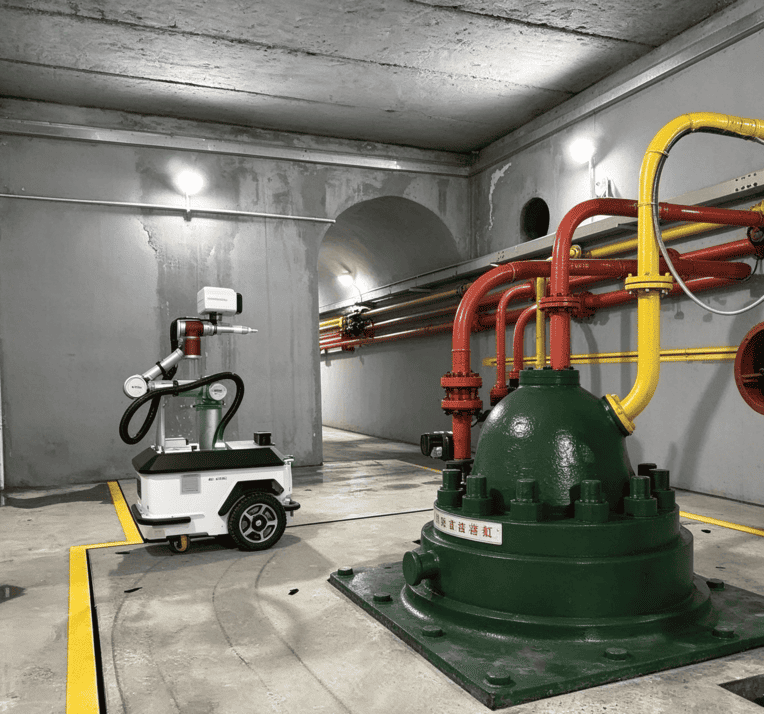
Traditional manual monitoring relies primarily on measurements taken at scheduled times and fixed locations. This approach can require substantial labor for field measurements, data compilation, plotting, calculation, and reporting.
An automated dam monitoring system can collect data from multiple monitoring points continuously or at configured intervals, according to the system’s capabilities and monitoring requirements.
The system can also automatically consolidate, organize, analyze, and store the collected data, significantly improving operational efficiency.
By reducing repetitive manual work, automated monitoring allows technical personnel to devote more time to interpreting results, investigating abnormal readings, and assessing potential safety risks.
3.2 Improved Visibility into Dam Operating Conditions
An automated monitoring system can acquire, consolidate, and organize measurements from dam monitoring points within minutes, depending on the system configuration and communication conditions.
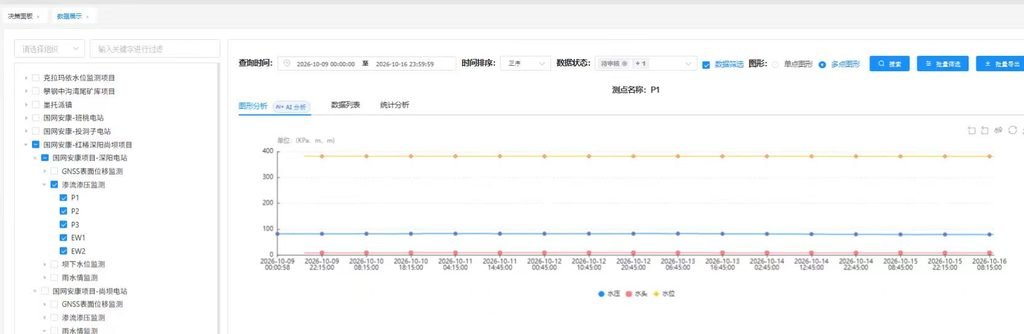
The processed data can be used for quantitative analysis and the generation of monitoring charts and reports, helping operators understand changes in dam behavior.
By reviewing deformation, seepage, uplift pressure, stress and strain, temperature, and environmental measurements together, dam operators can obtain a more comprehensive picture of operating conditions and identify trends that may require further investigation.
These monitoring results provide a technical basis for reservoir operation planning, maintenance decisions, and dam safety assessments.
3.3 Faster Identification of Abnormal Conditions
Automated data collection and analysis can help identify unusual measurements or changes in monitoring trends more promptly than conventional manual review alone.
When monitoring values exceed configured thresholds or data validation rules identify potential anomalies, the system can flag the relevant measurements and generate alarms according to its configuration.
Such alerts help operators prioritize inspections and investigations. Automated monitoring supports safety management, but it does not replace professional engineering assessment, instrument verification, or appropriate emergency response procedures.
4. The Role of Reliable Data Acquisition Hardware
Automated dam monitoring depends on reliable data acquisition, stable communications, and consistent handling of measurements from multiple types of instruments.
Data acquisition hardware and industrial remote telemetry units (RTUs) can serve as key components in this process by connecting field instruments to monitoring platforms and supporting the transfer of measurement data for analysis and review.
Depending on the equipment configuration, relevant capabilities may include:
- Acquisition of data from compatible monitoring instruments
- Multi-channel measurement and data collection
- RS485 and supported industrial communication protocols
- Remote data transmission through supported communication networks
- Data storage and retrieval, where supported
- Integration with supervisory platforms and third-party monitoring systems
For large infrastructure projects, hardware compatibility, measurement reliability, communication stability, and long-term maintainability are important considerations when designing or upgrading an automated monitoring system.
Hu Entropy Tech provides industrial RTUs, vibrating wire data acquisition equipment, and customized monitoring hardware for infrastructure and engineering applications. Our products can support the field data acquisition and communication requirements of dam safety monitoring systems, subject to the instrument interfaces and system configuration of each project.
Conclusion
The Ak Hydropower Station project demonstrates the importance of integrating automated data acquisition with established dam observation practices.
By combining automated measurements with periodic manual verification, monitoring systems can improve data availability, operational efficiency, and visibility into dam behavior. These capabilities help dam operators make better-informed decisions and support the long-term safe operation of critical water infrastructure.
Hu Entropy Tech works with engineering companies and system integrators to provide data acquisition and remote monitoring hardware for infrastructure monitoring applications.
Looking for data acquisition hardware for your dam safety or infrastructure monitoring project?
Contact Hu Entropy Tech to discuss your monitoring instruments, communication requirements, and OEM/ODM hardware needs.
Website: https://huentropytech.com/