
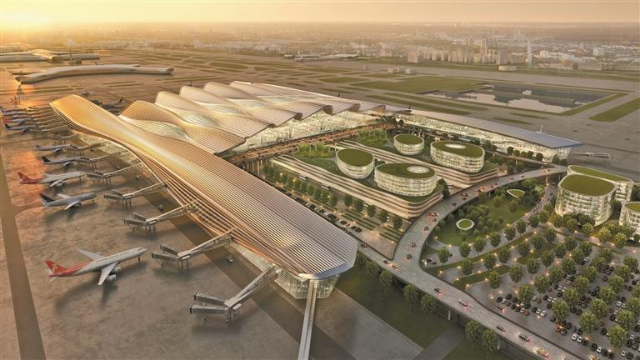
Application 1: Shenzhen Bao’an International Airport T2 Terminal Area and Supporting Infrastructure
Project Overview
The Shenzhen Bao’an International Airport T2 Terminal Area and Supporting Infrastructure Project was developed by Shenzhen Airport (Group) Co., Ltd. Located between Runways 1 and 2, the project represents a major infrastructure development in Guangdong Province and Shenzhen, with a total investment of approximately RMB 30.124 billion.
The project encompasses airfield facilities, terminal buildings, integrated transportation infrastructure, and associated supporting facilities.
Terminal Building and Airfield Infrastructure
The T2 terminal building has a total floor area of approximately 400,000 m² and a height of 47.44 m. It comprises four above-ground floors and two basement levels, with a designed annual passenger handling capacity of 31 million.
The airfield works include the construction of 52 contact aircraft stands and 11 remote aircraft stands, together with associated taxiways, service roads, perimeter fencing, access gates, and other supporting facilities.
Integrated Transportation and Supporting Facilities
Key components of the integrated transportation infrastructure include:
- A rail transit interchange center covering approximately 30,000 m²
- A ground transportation center covering approximately 30,000 m²
- A parking structure covering approximately 143,500 m²
- An airside automated people mover system
- Railway-related infrastructure modifications
- Intelligent monitoring of deep foundation pits
The project integrates aviation, rail transit, ground transportation, and supporting infrastructure, requiring careful coordination across multiple engineering disciplines.
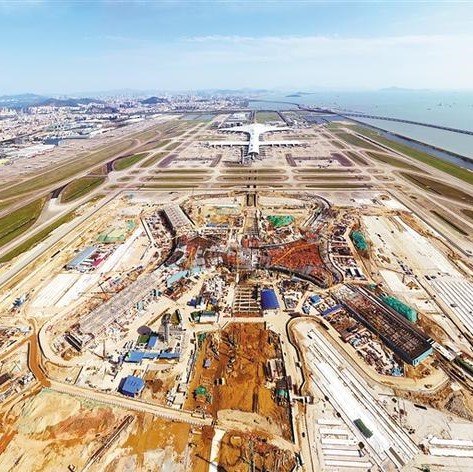
Intelligent Monitoring for Deep Foundation Pits
Deep foundation pit monitoring is an important part of large-scale infrastructure construction, particularly where excavation takes place in complex urban environments and near existing transport infrastructure.
Intelligent monitoring systems can collect field measurements, transmit monitoring data, and support the timely identification of abnormal changes during excavation. Depending on the project design, monitoring may cover ground and structural deformation, retaining structure behavior, groundwater conditions, and other critical parameters.
Reliable data acquisition and communication equipment can support the integration of field monitoring instruments with centralized monitoring platforms, helping engineering teams improve visibility into site conditions and make informed construction safety decisions.
Hu Entropy Tech provides industrial RTUs, data acquisition equipment, and customized monitoring hardware for infrastructure and engineering monitoring applications.
Application 2: Shenzhen Bay Sports Center — Deep Foundation Pit Monitoring
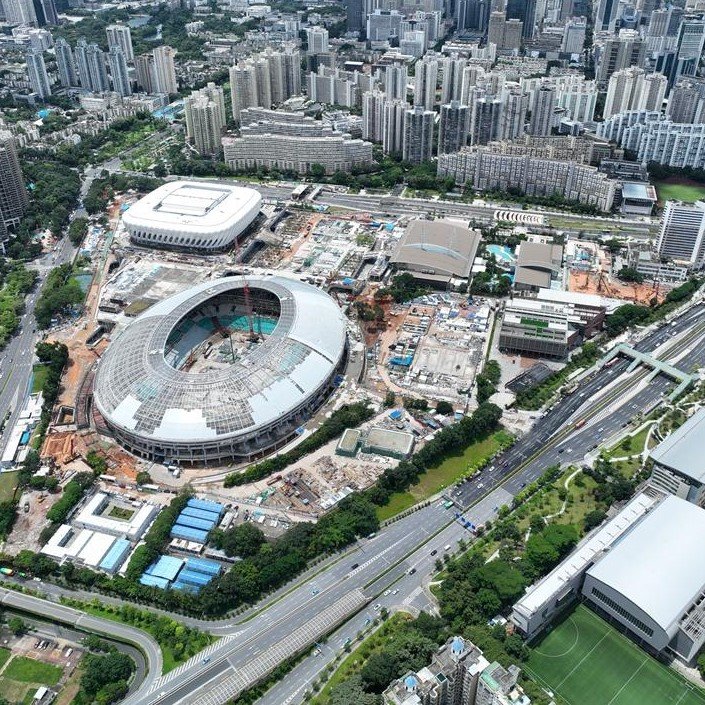
Project Overview
Shenzhen Bay Sports Center is located within the reclaimed land area of Houhai, along the central section of Shenzhen’s coastal leisure belt. The site covers approximately 30.77 hectares.
The original site consisted of shallow coastal beach terrain, which was subsequently converted into land through reclamation.
Geotechnical Conditions and Excavation Challenges
The foundation pit has an excavation depth of approximately 9 m. The excavated soil profile contains substantial thicknesses of weak soils, including artificial fill and silt.
These ground conditions can present geotechnical challenges during excavation, including potential ground deformation and changes in the behavior of surrounding soil and structures.
For deep foundation pits in reclaimed coastal areas, effective monitoring is important for understanding ground behavior throughout construction.
Intelligent Monitoring of Deep Foundation Pits
Depending on the monitoring design, a deep foundation pit monitoring system may incorporate instruments for measuring:
- Horizontal displacement of retaining structures
- Ground surface settlement
- Deep soil displacement
- Groundwater level changes
- Structural deformation at selected monitoring points
Automated data acquisition and remote communication can help engineers access monitoring results more efficiently, track changes over time, and identify measurements that require further investigation.
Industrial RTUs and data acquisition equipment can serve as hardware components connecting compatible field instruments to monitoring platforms. The specific instruments, communication protocols, and acquisition configuration depend on the project’s engineering requirements.
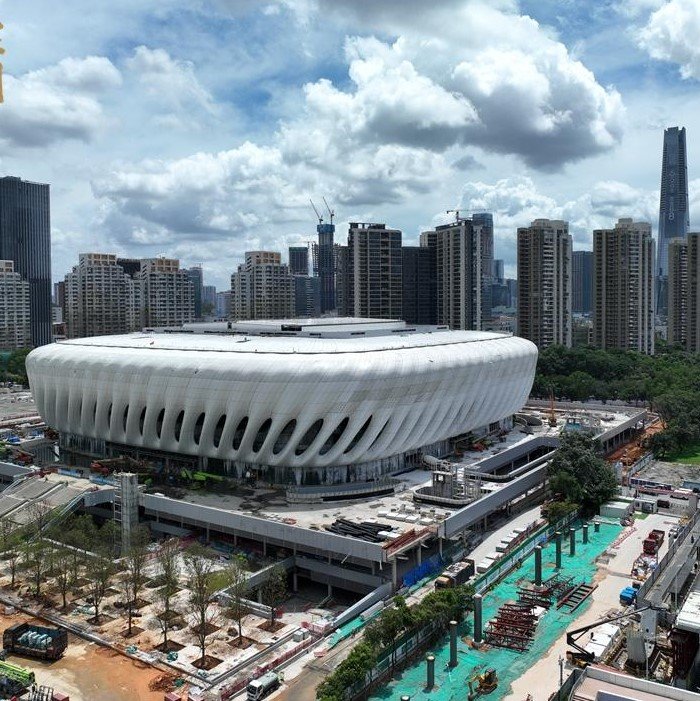
Supporting Infrastructure Safety with Reliable Data Acquisition
For complex urban construction projects, reliable field data is essential to effective monitoring and engineering assessment.
Hu Entropy Tech manufactures industrial RTUs, vibrating wire data acquisition units, and remote monitoring hardware for infrastructure, geotechnical, and structural monitoring applications. Our equipment can support data collection and communication in monitoring systems designed for deep foundation pits and other civil engineering projects.
Contact Hu Entropy Tech to discuss data acquisition hardware, industrial communication, and OEM/ODM requirements for your monitoring projects.