
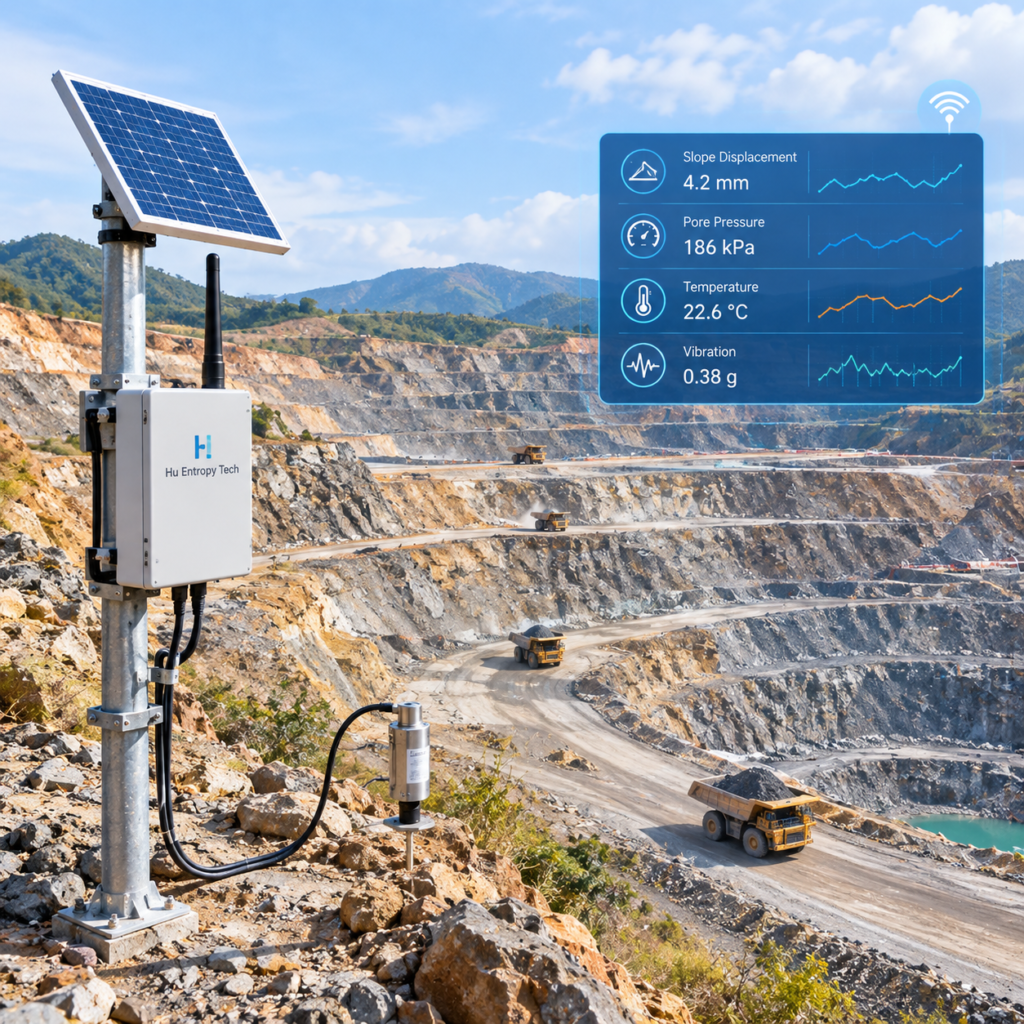
Mining and Ground Stability Monitoring
Automated Slope Monitoring | Ground Deformation | Industrial RTUs | Remote Monitoring and Early Warning
1. Overview
Mining operations can significantly change slope stability and surrounding ground conditions. Reliable monitoring is essential for identifying potential geological hazards, assessing ground movement, and improving mine safety management.
Hu Entropy Tech provides industrial RTUs, vibrating wire data acquisition equipment, and remote monitoring hardware for engineering and geotechnical monitoring applications.
Combined with suitable sensors, positioning technologies, and monitoring platforms, these hardware components can support automated data acquisition and remote monitoring for open-pit mine slopes, tailings storage facilities, underground mining areas, and ground subsidence monitoring.
2. Key Challenges in Mining Safety
Limited Real-Time Monitoring
Mining and excavation activities can change slope stability and ground conditions. Conventional manual inspections may not provide sufficiently frequent or continuous measurements, making it difficult to identify developing hazards in time.
Limited Visibility of Personnel and Vehicles
In complex mining environments, personnel and vehicles may operate across large areas, multiple access roads, and different working levels. Inaccurate positioning and limited remote visibility can make coordination and safety management more difficult.
Complex Operating Conditions and Safety Risks
Mining sites may involve both surface and underground operations, complex road networks, heavy vehicles, and high personnel density. These conditions increase the challenges of managing geological hazards, vehicle movements, and personnel safety.
3. Integrated Monitoring and Safety Management
A comprehensive mining safety monitoring system can combine multiple technologies to improve site visibility and support early warning.
Ground Stability and Slope Monitoring
For open-pit mine slopes, tailings storage facilities, and ground subsidence above mined-out areas, monitoring systems may integrate:
- BeiDou high-precision positioning: Monitoring surface displacement at selected points.
- Ground-based InSAR: Observing surface deformation over broad areas.
- LiDAR: Capturing terrain and surface geometry.
- GNSS monitoring: Tracking ground displacement at instrumented locations.
- Vibrating wire sensors: Measuring compatible geotechnical parameters, such as strain or pressure.
- Deep displacement and groundwater monitoring: Evaluating subsurface movement and groundwater conditions.
- Rainfall and video monitoring: Providing additional environmental and visual information.
The combination of these technologies supports multi-source data integration, automated monitoring, and risk warning, depending on the project design.
Personnel and Vehicle Monitoring
For mine personnel and vehicle management, an integrated system may combine BeiDou positioning, UWB or Bluetooth technologies, video and audio systems, digital twins, and 5G communications.
Potential functions include real-time personnel and vehicle tracking, electronic geofencing alerts, operational coordination, and centralized visualization.
These functions require the corresponding positioning devices, communications infrastructure, software platform, and site-specific integration.
RTUs and Remote Data Acquisition
Industrial RTUs provide a field-level interface for collecting data from compatible monitoring instruments and transmitting measurements to a centralized platform.
Depending on the selected model and system configuration, RTUs can support sensor integration, industrial communication, remote data transmission, and integration with wider monitoring systems.
This helps connect distributed monitoring points across large and remote mining sites.
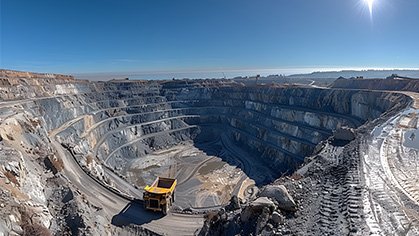
4. Project Case Study: Automated Slope Monitoring at an Open-Pit Mine
Project Background
An open-pit mining operation with a designed production capacity of 2.0 million tonnes per year (Mt/a) initiated a phased project to establish and expand an automated slope monitoring system in response to mining progress and slope safety management requirements.
The project was implemented in two phases:
- Phase I: Construction of an automated slope monitoring system.
- Phase II: Expansion of the existing system, including additional monitoring equipment and network integration.
Key Challenges
Low monitoring efficiency and inconsistent measurement data
Traditional manual inspections and measurements were constrained by labor availability and the time required to access monitoring points. They could not readily provide continuous, real-time monitoring, while differences in operator experience and measurement practices could introduce subjectivity and errors.
Remote location and a demanding implementation schedule
The mine was located in a remote area of northwestern China, where transportation and logistics were challenging. The tight project schedule added further pressure to equipment deployment and system implementation.
Implementation Approach
At the customer’s request, an automated slope monitoring and early warning solution was implemented through the two project phases.
The project also established data connectivity between the mining enterprise, the relevant mine safety regulatory and supervisory authorities, and the national-level authority.
The monitoring solution was built around BeiDou high-precision positioning and integrated multiple sensors with Remote Telemetry Units (RTUs) to provide automated, multi-source monitoring.
The system incorporated:
- GNSS-based surface displacement monitoring
- Stress monitoring
- Deep displacement monitoring
- Groundwater level monitoring
- Video surveillance
- Rainfall monitoring
- Audible and visual alarms
By integrating positioning, the Internet of Things (IoT), edge computing, artificial intelligence, and big-data-based warning analysis, the system established a comprehensive monitoring and early warning framework.
The resulting architecture supports high-precision, multi-sensor, all-weather monitoring and helps provide continuous access to information relevant to slope stability and mine safety management.
5. Benefits of Automated Mining Monitoring
An integrated monitoring system can help mining operators:
- Improve the availability of slope and ground movement data.
- Reduce dependence on manual inspections.
- Combine surface displacement, subsurface movement, groundwater, rainfall, and video information.
- Identify abnormal trends and support timely warning.
- Improve remote visibility across geographically distributed monitoring points.
- Support data sharing between mining enterprises and relevant regulatory authorities.
Actual monitoring accuracy, update intervals, warning thresholds, and system availability depend on the selected instruments, network conditions, installation design, and monitoring platform.
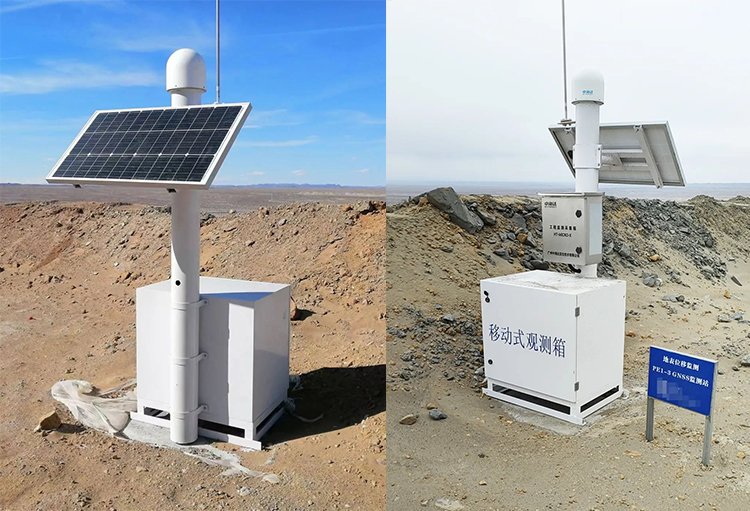
6. Hu Entropy Tech Hardware for Mining Monitoring
Hu Entropy Tech provides industrial RTUs, vibrating wire data acquisition units, multi-channel acquisition equipment, and customized monitoring hardware for infrastructure and geotechnical applications.
Our hardware can serve as a field data acquisition and communication component in mining monitoring systems, subject to sensor compatibility and project-specific requirements.
Potential integration considerations include:
- Compatible sensor interfaces and measurement requirements
- RS485 and supported industrial communication protocols
- Remote communication and data transmission
- Integration with third-party monitoring platforms
- Environmental protection and power supply
- OEM/ODM hardware and protocol customization
Looking for data acquisition hardware for mining slope or ground stability monitoring?
Contact Hu Entropy Tech to discuss your monitoring instruments, RTU requirements, communication interfaces, and OEM/ODM needs.
Website: https://huentropytech.com/