
Engineering Monitoring · Industrial IoT · Remote Telemetry
Introduction
Many engineering monitoring projects are located far from cities, communication infrastructure, and maintenance personnel.
A dam may be situated in a remote mountain valley. A slope monitoring station may be installed along a highway with limited access. A hydrological station may need to operate beside a reservoir or river for months without regular on-site visits.
In these environments, traditional manual data collection can be expensive, time-consuming, and insufficient for applications that require frequent measurements.
An automated monitoring system needs to do more than collect sensor readings. It must also transmit data reliably, operate with limited on-site intervention, and help engineers identify abnormal conditions in time.
This is where an Industrial 4G RTU (Remote Terminal Unit) can play an important role.
By combining field data acquisition interfaces with cellular communication and remote monitoring capabilities, a suitable 4G RTU can connect remote engineering sites to a central monitoring platform—without requiring a fixed broadband connection at every location.
In this article, we explore how 4G RTUs support unattended monitoring, the technical challenges they help address, and what engineers should consider when selecting a solution.
1. Why Is Unattended Monitoring Difficult in Remote Areas?
Remote monitoring projects face several challenges that are less significant in conventional indoor or urban installations.
1.1 Difficult Site Access
Monitoring equipment may be installed on steep slopes, near reservoirs, inside tunnels, or in isolated areas of large infrastructure projects.
Sending personnel to each site to read instruments or retrieve data increases operating costs and makes frequent monitoring difficult.
1.2 Limited Communication Infrastructure
A remote monitoring site may not have a wired internet connection. Installing dedicated communication infrastructure can be expensive, especially when measurement points are widely distributed.
Where cellular coverage is available, 4G communication can provide a practical alternative.
However, network availability and signal strength must be verified at the actual installation site.
1.3 Unstable Power Supply
Some field stations operate on batteries or solar power rather than a continuous mains supply.
The monitoring equipment must therefore be selected according to the available power budget, measurement frequency, transmission schedule, and environmental conditions.
Low-power operation can be particularly important when equipment is expected to run unattended for long periods.
1.4 The Need for Timely Alerts
In applications such as slope stability monitoring, dam safety monitoring, and flood warning, engineers may need to identify changes before they become more serious.
Manual inspection alone may not provide the frequency of observations required by the monitoring plan.
An automated system can collect measurements on a schedule, send data to a monitoring platform, and support threshold-based alerts when the complete system is configured appropriately.
The objective is not simply to connect a device to the internet. It is to build a monitoring system that can continue collecting useful data with minimal on-site intervention.
2. What Is an Industrial 4G RTU?
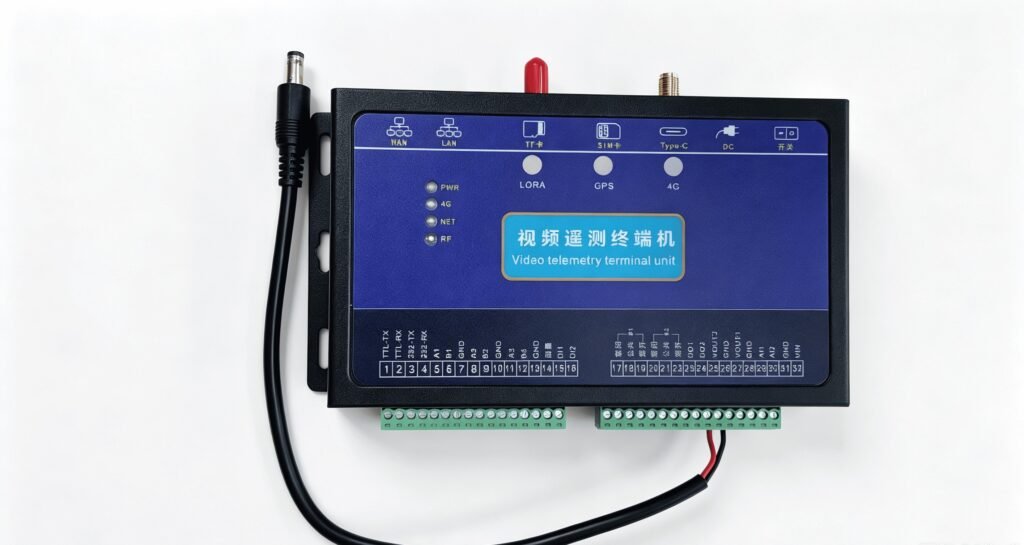
An Industrial 4G RTU is a field device designed to collect data from compatible sensors or instruments and transmit that data to a remote system through a cellular network.
Depending on the model, it may provide:
- RS485, RS232, or other industrial interfaces
- Modbus RTU or other supported communication protocols
- 4G LTE connectivity
- Digital inputs and outputs
- Local data logging
- Remote configuration and maintenance
- Edge processing and alarm-related functions
- Integration with cloud platforms or SCADA systems
Not every RTU supports all these features. The actual capabilities depend on the model and its hardware and firmware configuration.
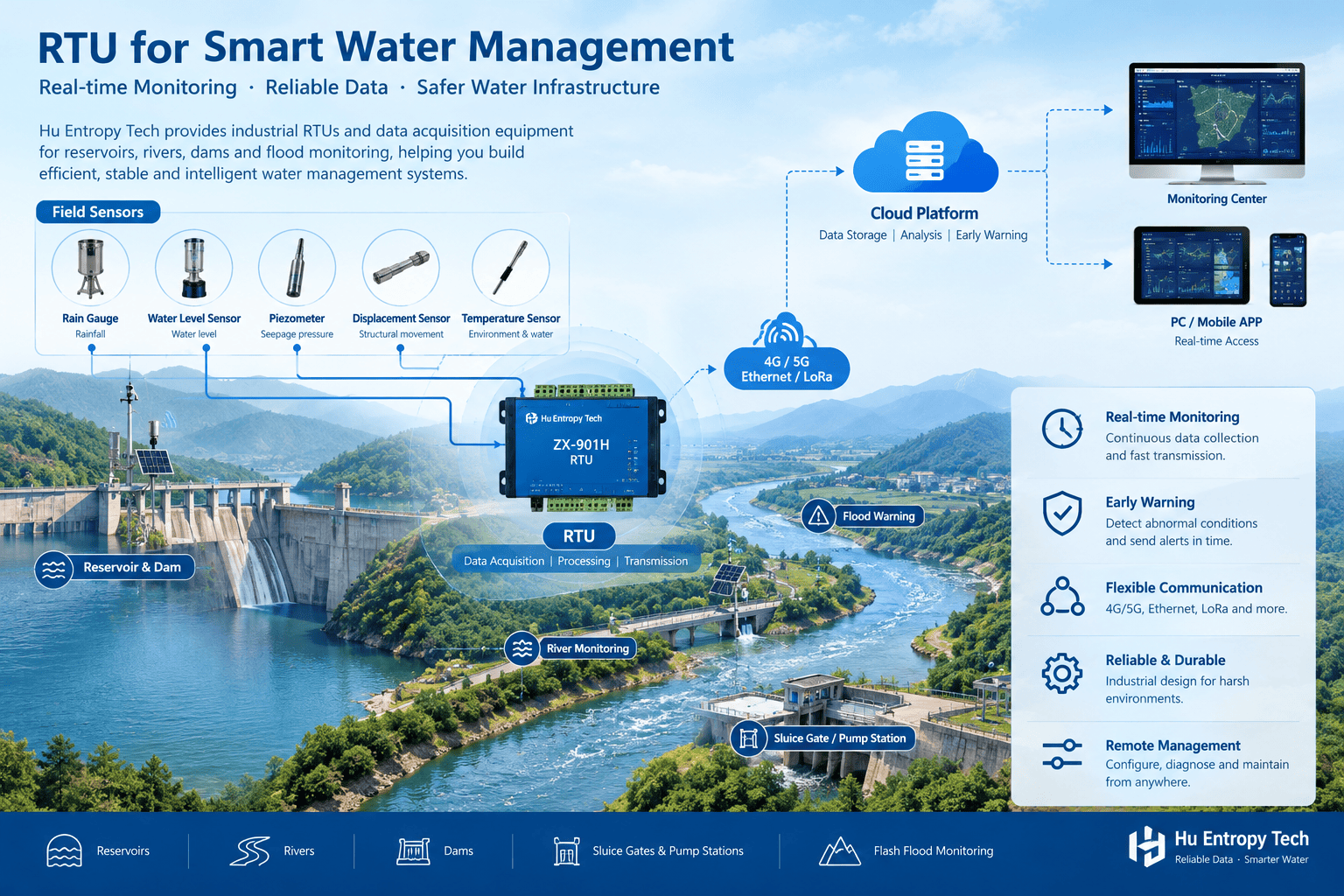
A typical remote monitoring architecture looks like this:
Field Sensors
     ↓
Data Acquisition Unit
     ↓
Industrial 4G RTU
     ↓
4G LTE Cellular Network
     ↓
Cloud Monitoring Platform
     ↓
Engineers / Control Center
In a more integrated system, the RTU may also perform sensor acquisition directly, eliminating the need for a separate data acquisition unit for supported sensor types.
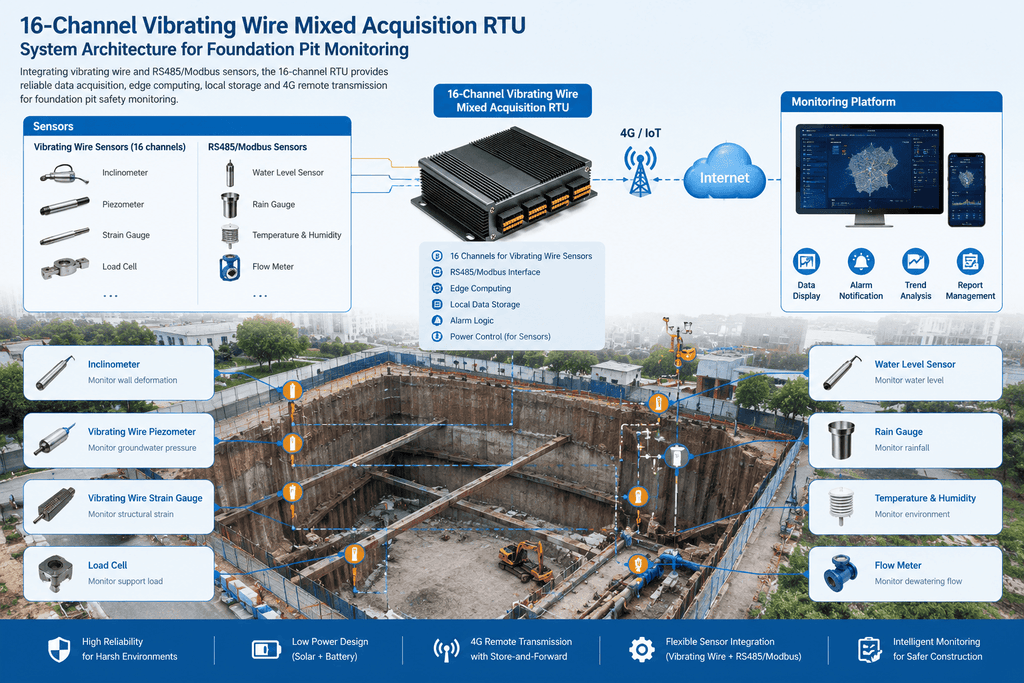
For example, an RTU specifically designed for vibrating wire monitoring can combine vibrating wire measurement, additional digital sensor integration, local data processing, and 4G communication.
This integration can reduce the number of separate devices required at a remote monitoring station.
3. How Does a 4G RTU Work in an Unattended Monitoring System?
A typical automated monitoring workflow consists of six steps.

Step 1: Measure Field Conditions
Sensors measure relevant parameters, such as pore water pressure, strain, displacement, water level, or rainfall, depending on the monitoring design.
Step 2: Acquire Sensor Data
A compatible data acquisition unit or integrated RTU reads the sensor signals and converts them into usable measurements.
Step 3: Process and Prepare the Data
Depending on the device, the RTU may apply calibration, convert measurements into engineering units, evaluate configured thresholds, or prepare data for transmission.
Step 4: Transmit Data over 4G
The RTU sends measurements to the designated server or platform using a supported protocol and cellular connection.
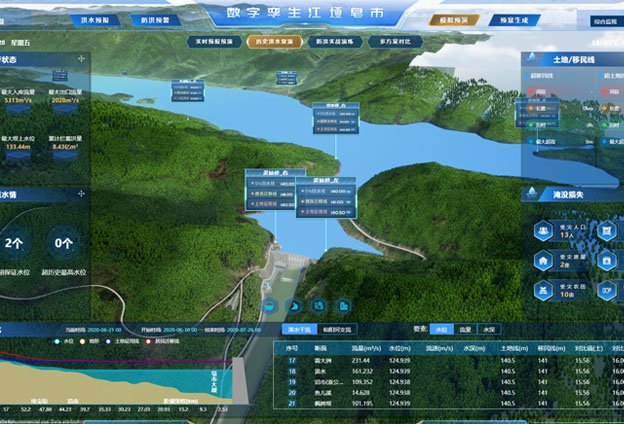
Step 5: Monitor Data Remotely
Engineers review current readings, historical trends, and device status through the monitoring platform.
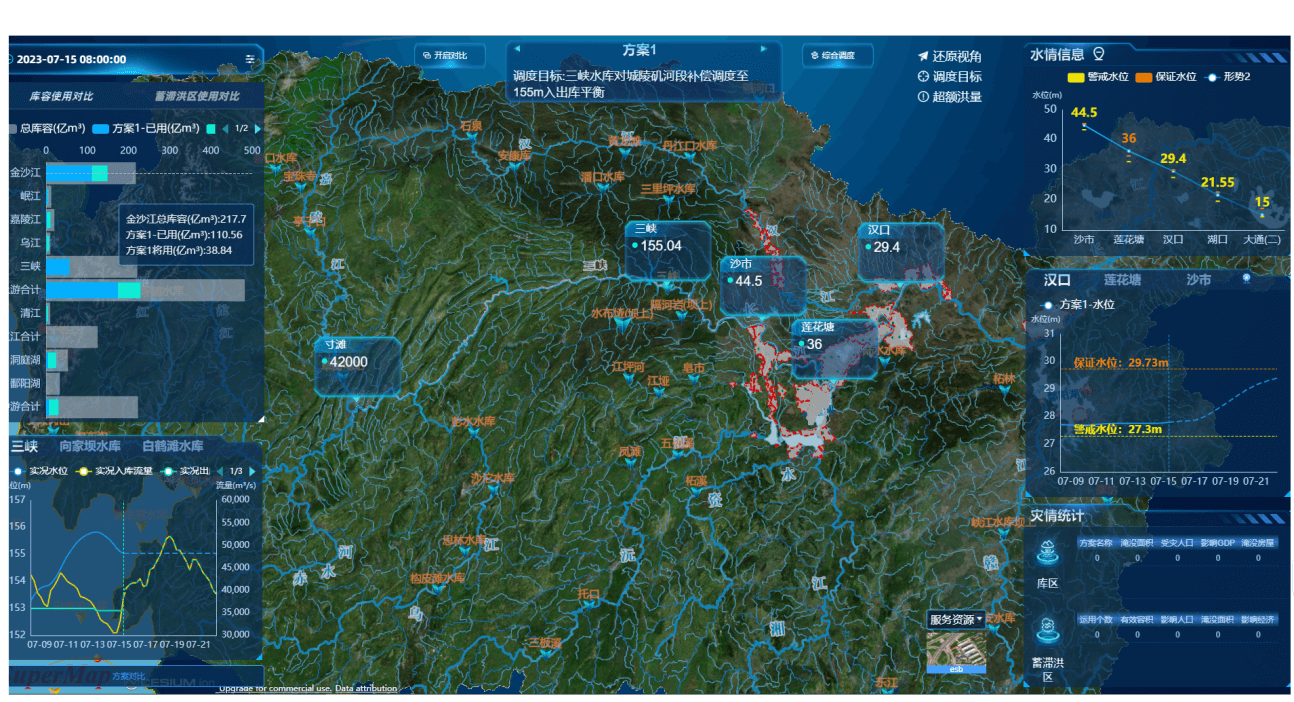
Step 6: Generate Alerts and Take Action
When configured conditions are met, the monitoring system can notify responsible personnel so they can investigate and take appropriate action.
The result is a monitoring workflow that can operate with substantially less routine on-site intervention.
However, remote monitoring does not eliminate the need for maintenance. Sensors, power supplies, communication equipment, and alarm rules still require appropriate inspection and testing.
4. Application 1: Dam Safety Monitoring
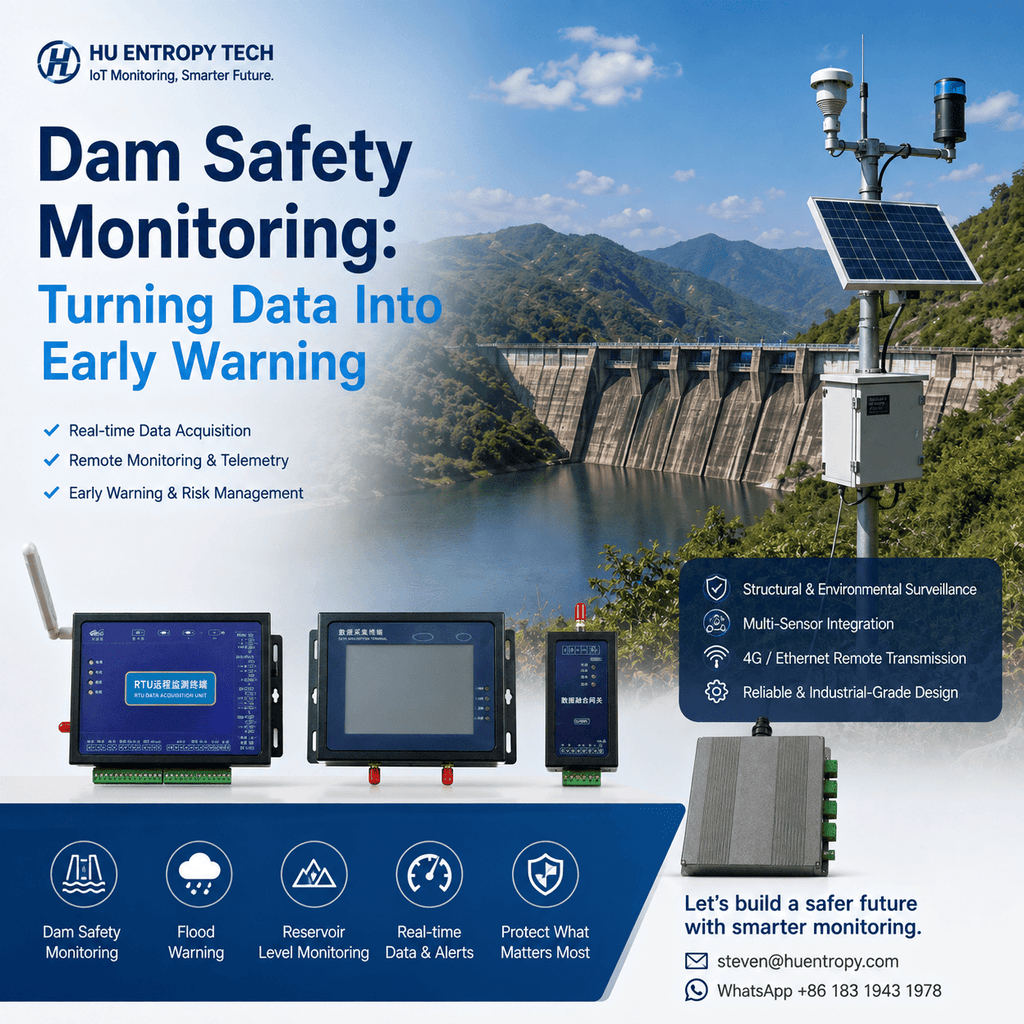
Dams require long-term observation of structural and environmental conditions. Depending on the dam type and monitoring plan, instrumentation may measure seepage pressure, uplift pressure, deformation, strain, water level, or other parameters.
A 4G RTU can help connect remote instruments to a central monitoring platform.
Typical architecture
Piezometers / Strain Gauges / Other Sensors
                    ↓
      Vibrating Wire Acquisition
                    ↓
          Industrial 4G RTU
                    ↓
             4G LTE Network
                    ↓
        Dam Safety Monitoring Platform
                    ↓
             Engineering Team
Key benefits
- Remote data collection: Measurements can be transmitted without routine manual retrieval at each point.
- Centralized monitoring: Data from multiple stations can be viewed through a common platform.
- Historical analysis: Regular measurements support trend analysis and comparisons over time.
- Alarm integration: Configured thresholds can help engineers identify conditions requiring further investigation.
For large dams, the system architecture should also account for redundant or alternative communication paths where required, local data retention, power backup, cybersecurity, and appropriate alarm escalation procedures.
A 4G RTU is one part of the monitoring system—not a substitute for a complete dam safety monitoring design.
5. Application 2: Slope Stability Monitoring

Slope monitoring is particularly challenging because measurement points may be distributed across steep or unstable terrain.
Field personnel may need considerable time to reach individual instruments, and conditions can change after heavy rainfall or other triggering events.
Depending on the site, a monitoring system may include:
- Inclinometers or displacement sensors
- Vibrating wire piezometers
- Strain gauges
- Rain gauges
- Water level sensors
- Other compatible instruments
An Industrial 4G RTU can collect data from supported instruments and send measurements to a remote monitoring platform.
Example workflow
- Sensors collect measurements according to the monitoring schedule.
- The acquisition device or RTU reads and processes the data.
- Measurements are transmitted through the available 4G network.
- The platform compares readings with configured thresholds and historical trends.
- Engineers receive notifications when predefined conditions are met.
This arrangement can improve the frequency and accessibility of monitoring information.
For safety-critical slopes, alarm thresholds and response procedures must be determined by qualified engineers. Network connectivity alone does not guarantee early warning, and sensor data should be interpreted in the context of site conditions.
6. Application 3: Reservoir and Hydrological Monitoring

Reservoirs, rivers, irrigation channels, and hydrological stations are often distributed over large geographic areas.
A monitoring system may need to collect water level, rainfall, flow, temperature, or other environmental measurements from unattended locations.
An Industrial 4G RTU can support remote transmission where cellular coverage is available.
For example:
Water Level Sensor ──┐
Rain Gauge ──────────┤
Flow Meter ──────────┤
                     ↓
             Industrial RTU
                     ↓
                4G LTE
                     ↓
         Hydrological Monitoring
                  Platform
                     ↓
         Data Analysis / Alerts
Depending on the device interfaces, the sensors may connect through analog inputs, digital interfaces, RS485, or supported industrial protocols.
What matters most in this application?
Power management: Remote stations may require solar panels and batteries.
Communication reliability: Cellular signal strength should be tested at the installation location.
Data continuity: Local logging and automatic retransmission can help preserve measurements during network outages, if supported.
Environmental protection: Enclosures, wiring, and installation practices must suit the site’s exposure to rain, humidity, temperature changes, and electrical interference.
These details often have a greater impact on long-term performance than the nominal availability of a 4G connection.
7. Why Are Multi-Channel 4G Vibrating Wire RTUs Important?
Many engineering monitoring projects use vibrating wire sensors to measure parameters such as pressure, strain, and displacement.
A conventional vibrating wire acquisition unit may collect measurements through an interface such as RS485 and Modbus RTU, but it may need a separate RTU or gateway to transmit the data remotely.
A multi-channel vibrating wire RTU can combine several functions in one device:
- Vibrating wire sensor measurement
- Multiple measurement channels
- Integration with compatible RS485 digital sensors
- 4G cellular communication
- Local data storage
- Edge data processing
- Remote monitoring and alarm-related functions
This can simplify installations where multiple vibrating wire sensors are grouped at a remote monitoring station.
The difference between the two architectures
Architecture A: Separate acquisition and communication devices
Vibrating Wire Sensors
Multi-Channel Data Acquisition Unit
Industrial 4G RTU / Gateway
Cloud Platform
Useful when acquisition and communication need to remain separate or when an existing RTU is already part of the project.
Architecture B: Integrated multi-channel 4G vibrating wire RTU
Vibrating Wire Sensors
Multi-Channel Vibrating Wire RTUAcquisition + 4G + local processing + data storage
Cloud Platform
Useful when a project benefits from combining measurement and remote telemetry in one device.
The integrated architecture may reduce wiring, equipment count, and installation complexity. The separate architecture may offer more flexibility when the project already has established acquisition and communication equipment.
The best choice depends on the channel count, sensor mix, system interfaces, and maintenance requirements.
8. Hu Entropy Tech’s Current Product Options
For this article, the product references below follow the current Hu Entropy Tech Product Brochure 2026, rather than the older ZX-series model names.
Hu Entropy Tech Product Brochure_2026.pdf
Hu Entropy Tech’s current portfolio includes dedicated vibrating wire acquisition devices, multi-channel 4G vibrating wire RTUs, and general-purpose Industrial RTUs.
A. Multi-channel vibrating wire acquisition: RS485 version
VW-401 / VW-801 / VW-1601
4-channel / 8-channel / 16-channel
Designed for vibrating wire signal acquisition with RS485 and Modbus RTU communication. These devices can be used with a separate RTU or gateway when remote cellular transmission is required.
B. Multi-channel vibrating wire hybrid acquisition RTU: 4G version

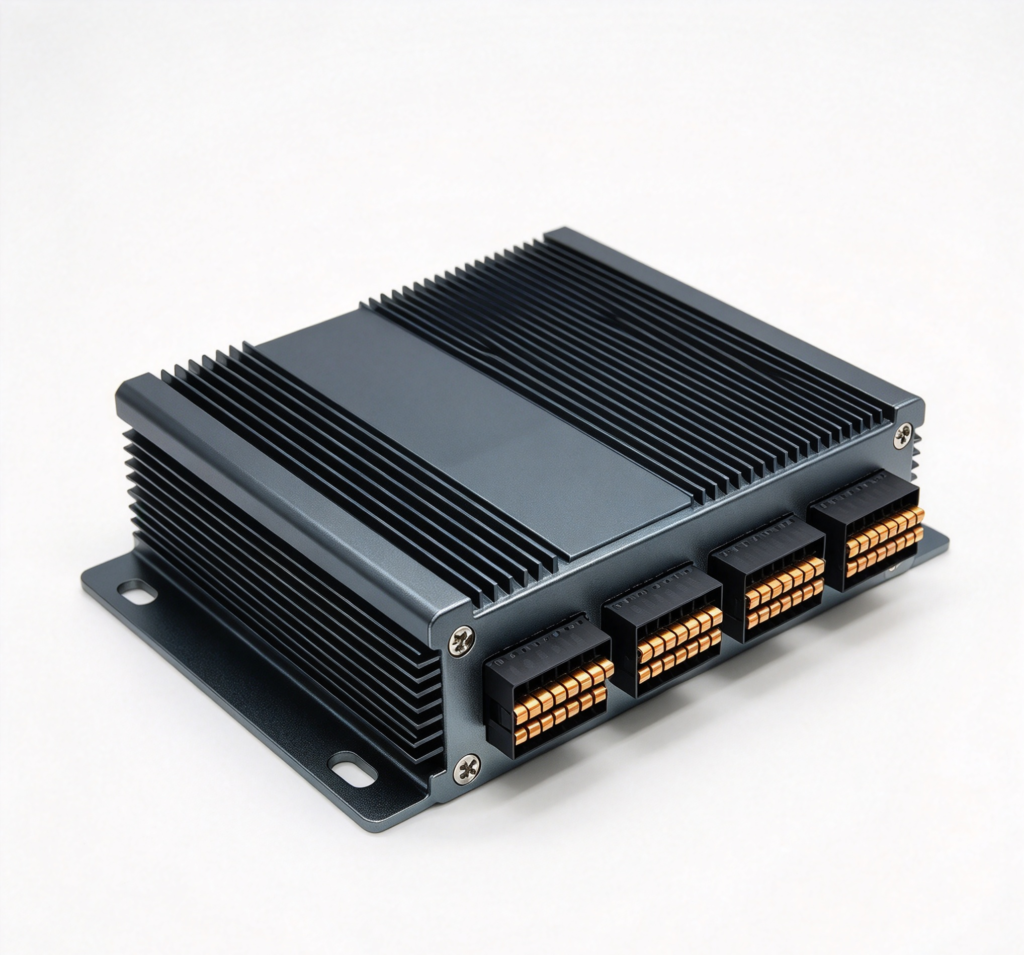
VW-402 / VW-802 / VW-1602
4-channel / 8-channel / 16-channel
The multi-channel 4G series is designed for remote vibrating wire monitoring. The product family is identified in the brochure as the VW-4816-4G Vibrating Wire Hybrid Data Acquisition RTU.
The listed capabilities include vibrating wire acquisition, RS485 digital sensor integration, 4G communication, edge processing, local storage, alarm management, and remote configuration. Confirm the required functions and communication options for the specific model before ordering.
Hu Entropy Tech Product Brochure_2026.pdf
The 16-channel 4G model, VW-1602, is particularly relevant to projects that need to consolidate a larger group of vibrating wire sensors at a remote station.
It provides an option between a dedicated 16-channel RS485 acquisition unit and a multi-channel RTU architecture with integrated 4G connectivity.
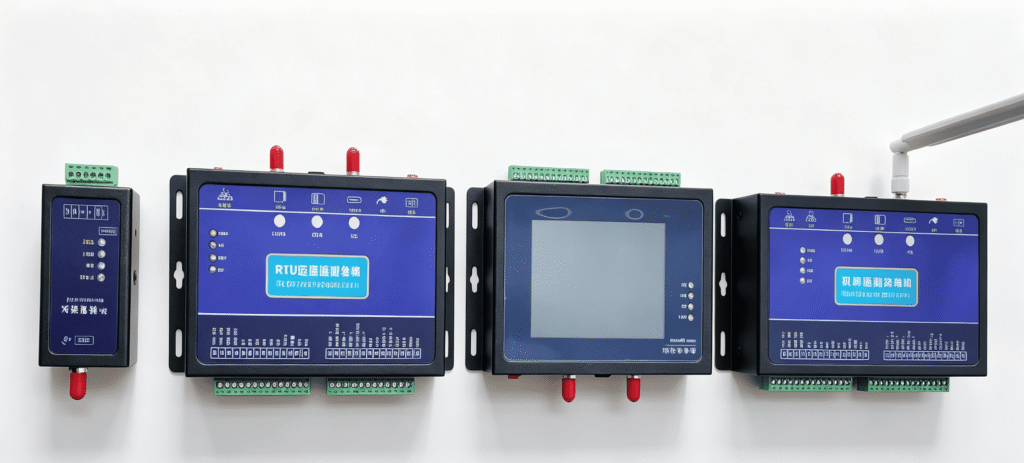
C. General-purpose Industrial RTUs
RTU-800H-4G
A compact 4G RTU for remote data acquisition and equipment monitoring. It can be considered when the project needs a separate remote communication device and compatible field interfaces.
RTU-900H / RTU-900H-TFT
Industrial RTU options for remote monitoring and telemetry. The TFT version is listed separately and should be evaluated according to the required user interface and system configuration.

RTU-901H
An Industrial RTU option for applications requiring remote telemetry and edge-related functionality. Check the product specification for the interfaces, protocols, and I/O required by the project.
The current company profile describes the general Industrial RTU portfolio as supporting options such as 4G LTE, Ethernet or LoRa connectivity, industrial interfaces, Modbus RTU/TCP, MQTT, and local data logging, depending on the model.
Hu_Entropy_Company_Profile_2026.pptx
These general-purpose RTUs should not be assumed to measure vibrating wire sensors directly unless the selected model explicitly supports that function or is connected to compatible vibrating wire acquisition hardware.
How should you choose?
| Requirement | Product direction to evaluate |
|---|---|
| 4, 8, or 16 vibrating wire channels with RS485 | VW-402 / VW-802 / VW-1602 series |
| 4, 8, or 16 vibrating wire channels with integrated 4G | VW-402 / VW-802 / VW-1602 series |
| 16-channel vibrating wire acquisition without integrated 4G | VW-1601 |
| Separate RTU for remote data transmission | RTU-800H-4G or another suitable RTU |
| Remote monitoring with additional integration requirements | Evaluate RTU-900H or RTU-901H according to the required specifications |
The selection should be based on the actual product configuration, not just the model name. In particular, verify channel count, communication method, sensor compatibility, power requirements, local storage, and protocol support.
9. What Should You Check Before Deploying a 4G RTU?
Choosing the right model is only one part of building a reliable remote monitoring station.
9.1 Cellular Coverage
Check the available cellular network and signal strength at the actual site. A 4G RTU cannot transmit data through a network that is unavailable or unusable at its installation location.
A suitable antenna, placement, and enclosure arrangement may improve connectivity, but the result should be validated on site.
9.2 Power Consumption
Estimate the total energy demand of the monitoring station, including the sensors, acquisition hardware, RTU, modem, and any connected peripherals.
For solar-powered installations, the power system should account for seasonal sunlight, battery capacity, transmission frequency, and periods of poor weather.
9.3 Local Data Storage
A remote station should have a clear strategy for handling temporary communication outages.
Where supported, local logging and Store-and-Forward functionality can preserve measurements during an outage and retransmit them after connectivity returns.
Check the available storage capacity, data retention period, timestamp handling, and retransmission behavior.
9.4 Protocol Compatibility
Confirm that the RTU can communicate with the acquisition device and the target platform.
For example, an acquisition device may use Modbus RTU over RS485, while the remote platform may receive data through MQTT or another supported interface.
The complete data path—including register mapping, units, timestamps, and error handling—should be tested before deployment.
9.5 Alarm Design
Define the measurement thresholds, alarm logic, communication-failure alerts, and escalation procedures.
For safety-critical monitoring, the design should consider what happens when sensor data is abnormal, data transmission stops, or the RTU loses power.
A monitoring platform should distinguish between an abnormal engineering measurement and a device or communication fault.
9.6 Maintenance and Cybersecurity
Unattended does not mean maintenance-free.
Plan for periodic equipment inspection, firmware management, credential security, access control, and recovery procedures. Remote configuration should be implemented with appropriate authentication and operational safeguards.
Conclusion
Industrial 4G RTUs provide a practical way to connect remote engineering monitoring stations with central monitoring systems.
They can help reduce manual data collection, support regular measurements, simplify communication infrastructure, and make field data more accessible to engineers.
Their value is particularly clear in:
- Dam safety monitoring
- Slope stability monitoring
- Reservoir and hydrological monitoring
- Bridge and tunnel monitoring
- Remote geotechnical instrumentation
- Other unattended engineering monitoring applications
For vibrating wire monitoring, the choice is no longer limited to a standalone acquisition unit plus a separate communication device. A multi-channel 4G vibrating wire RTU can combine acquisition, telemetry, and selected edge functions in one device.
Within Hu Entropy Tech’s current portfolio, the VW-402, VW-802, and VW-1602 provide 4-, 8-, and 16-channel options for evaluating this integrated architecture, while the VW-401, VW-801, and VW-1601 provide corresponding multi-channel RS485 acquisition options.
Hu Entropy Tech Product Brochure_2026.pdf
The right solution depends on the actual sensors, channel requirements, power budget, cellular coverage, communication protocols, and monitoring platform.
Ultimately, the goal is straightforward:
Collect reliable measurements, transmit them efficiently, preserve the data when communication is interrupted, and give engineers timely access to the information they need.
About Hu Entropy Tech
Shenzhen Hu Entropy Tech Co., Ltd. develops vibrating wire data acquisition hardware, multi-channel vibrating wire RTUs, Industrial RTUs, and IoT hardware for engineering monitoring applications.
We work with engineering companies, monitoring system integrators, equipment manufacturers, and OEM/ODM partners on hardware for dam safety, slope stability, bridge and tunnel monitoring, hydrological applications, and other remote monitoring projects.
Website: https://huentropytech.com/
